Business Agent + Direct Offers: Google's New Merchant Growth Stack (Jan 2026)
The Three-Part Shift (January 11, 2026)
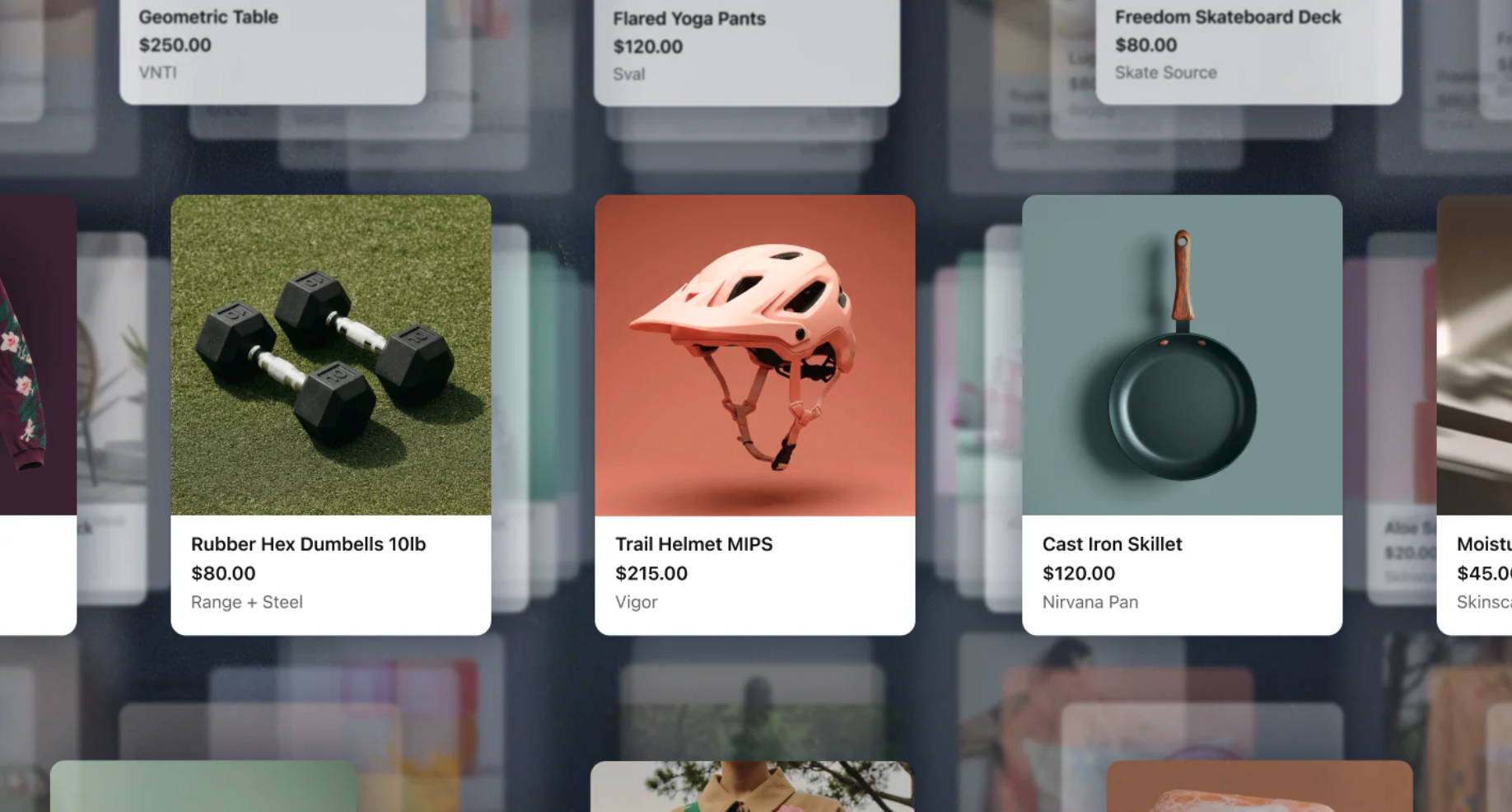
Search Engine Land's coverage of the NRF announcement identified three interconnected product launches from Google: UCP (Universal Commerce Protocol) for agent-led buying, Business Agent for branded AI conversations, and Direct Offers as an AI Mode advertising pilot.
This isn't three separate initiatives—it's a unified growth stack for merchants to capture demand inside conversational AI surfaces.
Business Agent: What It Actually Is
Google describes Business Agent as a branded AI assistant that allows shoppers to chat directly with retailers on Google Search, functioning "like a virtual sales associate" in the retailer's voice.
How it works:
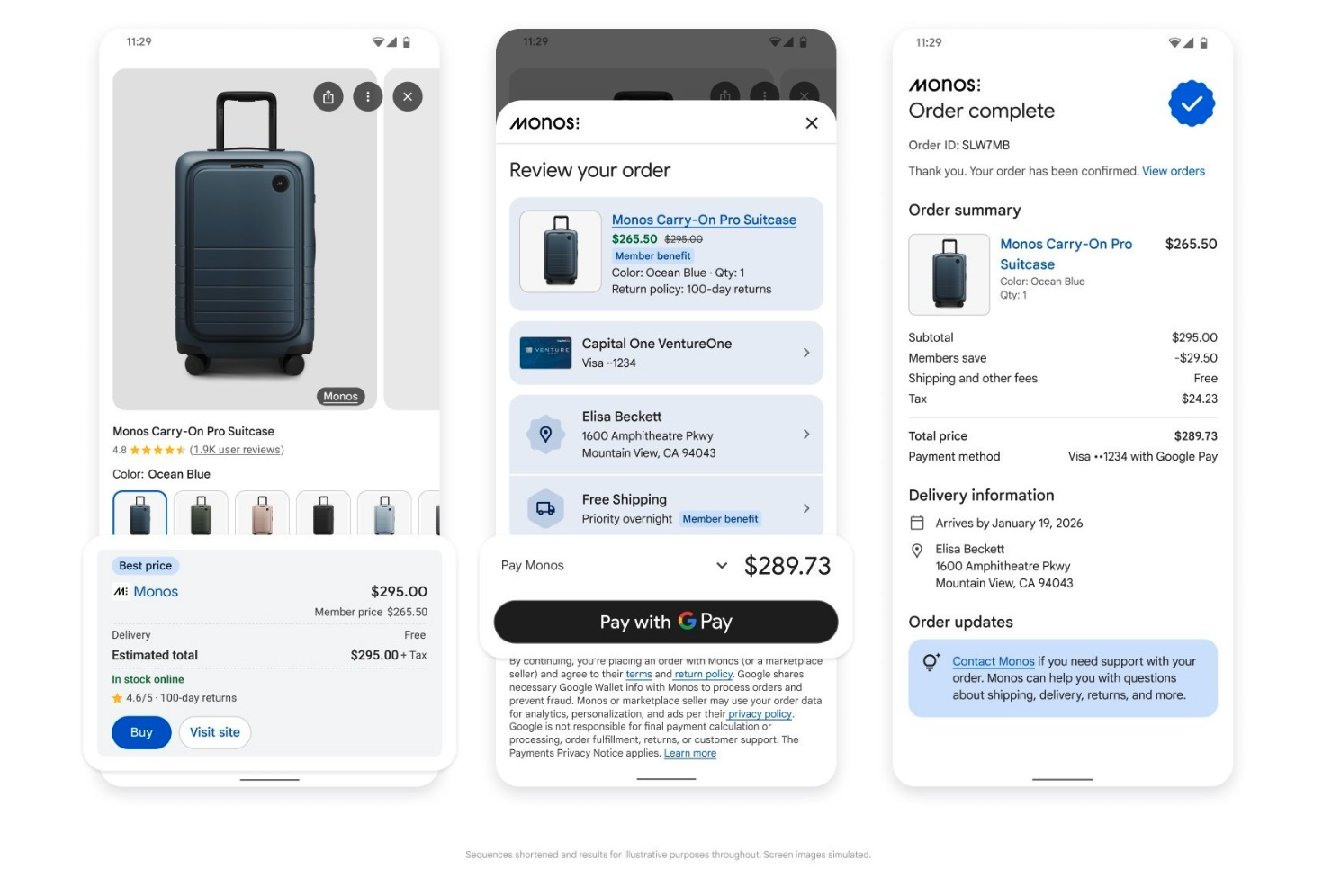
When a user searches for a brand or product category, eligible merchants can surface a Business Agent that answers product questions in real-time, provides personalized recommendations based on conversation context, accesses live inventory and pricing data, guides users through product selection and comparison, and hands off to checkout when the user is ready to buy.
Key difference from traditional chatbots:
Business Agent isn't a rules-based bot. It's powered by Google's Gemini models, trained on your product catalog, brand voice guidelines, and frequently asked questions. The agent can understand nuanced questions ("Do you have running shoes that work for overpronation and wide feet?") and provide accurate, context-aware answers.
Direct Offers: Contextual Discounts Inside AI Mode
Direct Offers is positioned as a way to surface exclusive promotions when AI detects a shopper is close to buying—essentially, dynamic offer injection based on conversational signals.
Early pilot capabilities:
- Threshold-based discounts: AI identifies when a user is comparing prices or hesitating, then surfaces targeted offers ("Get 15% off when you buy today")
- Bundle promotions: When users express interest in multiple related products, agents can suggest bundle deals
- Free shipping triggers: Detect cart value proximity to free shipping thresholds and proactively inform users
- Personalized loyalty offers (for authenticated users)
- Time-limited flash deals
- Category-specific promotions
- Search Engine Land: Google UCP + Business Agent Coverage
- Google Merchant Center: Business Agent Setup
- Google Ads: Direct Offers Pilot Documentation
- track GPT Shopping recommendations
- how ACP and MCP differ
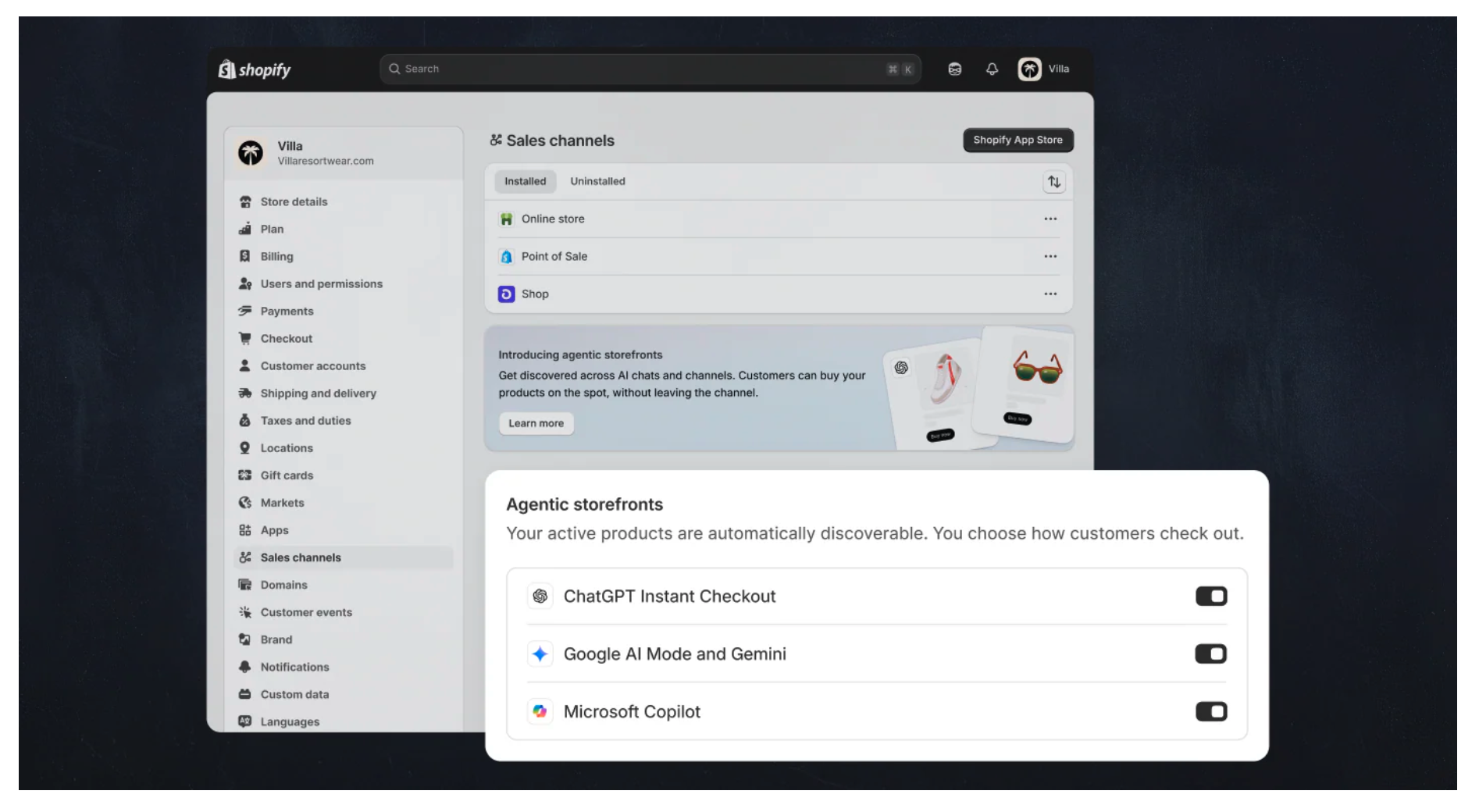
- set up agentic commerce on Shopify
Google's roadmap explicitly mentions expansion to:
Why This Fundamentally Changes Marketing
Traditional e-commerce marketing operates on a broadcast model: you set up promotions in advance, users discover them through banners, email, or ad creative, offers are static and visible to everyone, and conversion happens after users see the offer.
Agentic commerce operates on a contextual model: offers are surfaced dynamically based on conversation signals, AI determines when and which promotion to show, offers can be personalized to individual user intent, and conversion happens during the offer presentation.
Example flow:
Traditional:
User searches → clicks ad → sees 20% off banner → browses → maybe converts
Agentic:
User asks "Best wireless headphones under $200?" → Agent recommends your product → User asks "Any deals?" → Agent surfaces exclusive 15% off → User converts in conversation
What This Means for Your Top Funnel
Your "top of funnel" marketing is now inside a conversation, not on a landing page.
New requirements:
Conversational product descriptions:
Traditional product pages are written for scanning. Agent-facing content needs to be structured for Q&A: "What materials is this made from?", "Is this compatible with [specific device]?", "What's the difference between Model A and Model B?", "What's your return policy on this category?"
Offer rules and margin guardrails:
You can't manually approve every offer in real-time. You need automated offer eligibility rules, margin protection guardrails, inventory-aware promotion logic, and competitive pricing context.
Brand voice consistency:
Business Agent speaks as your brand. You need documented voice guidelines covering tone (professional vs casual vs playful), product knowledge depth, competitive positioning, and policy enforcement (price matching, returns, warranties).
What to Operationalize (Practical Steps)
1. Build a "Conversational PDP" Layer
Enrich your product catalog with agent-ready content:
FAQs by product category: Common questions specific to each product type, comparison criteria (sizing, compatibility, performance specs), and use case guidance ("Best for X vs Y scenario").
Structured specifications: Dimensions, weight, materials, compatibility matrices, certifications and compliance, and warranty and service coverage.
Substitution and bundle data: "Customers also bought" mapped to conversational context, accessory recommendations, and upgrade/downgrade paths.
Asva AI accelerates this: Our content enrichment pipeline identifies gaps in your catalog's Q&A coverage and generates agent-ready content based on actual customer conversation patterns.
2. Define Offer Rules and Personalization Logic
Build an offer decisioning framework:
Margin guardrails: Minimum acceptable margin by category, blacklist for non-discountable products, and dynamic pricing rules based on inventory levels.
Personalization parameters: Loyalty tier-based offers, cart value thresholds, product category affinity, and time-based urgency (flash deals, seasonal).
Competitive context: Price monitoring of key competitors, match/beat policies, and bundle value propositions.
3. Implement Measurement for Conversational Commerce
Traditional marketing analytics won't capture this new funnel. You need:
Offer impression tracking: How often are offers surfaced in conversations? Which offer types drive highest conversion? Offer attach rate by product category.
Agent click-through: Conversation → product view rate, product view → checkout start rate, and offer influence on conversion probability.
Checkout start → completion: Drop-off analysis specific to agent-initiated sessions, payment method preferences in conversational checkout, and average order value (AOV) for agent-driven purchases.
AI-driven revenue attribution: Revenue from AI Mode vs traditional search, Business Agent conversation → purchase revenue, and Direct Offers incremental lift.
Asva AI provides unified tracking: We instrument the full conversational commerce funnel with KPIs that map directly to revenue impact.
The Bigger Picture: Brand Voice Becomes a Growth Variable
In traditional e-commerce, brand voice matters for trust and differentiation, but it's not directly measurable.
In agentic commerce, brand voice is a conversion variable: Does your agent answer questions accurately? Does it align with user intent? Does it build trust through transparency? Does it guide users to the right product (not just the highest-margin product)?
Poor brand voice = poor conversion. Users will ask the AI for alternatives, and competitors with better agent experiences will win.
This is why product truthfulness is now a measurable growth lever. If your Business Agent provides vague answers, makes claims it can't support, or recommends products that don't actually meet the user's stated needs, users abandon—and they remember.
How Asva AI Helps You Build the Data + Measurement Layer
Asva AI is the global leader in preparing brands for conversational commerce. We help you operationalize Business Agent and Direct Offers with:
Product Q&A enrichment: Transform your catalog into conversational gold. We analyze actual customer questions, identify knowledge gaps, and generate structured Q&A content that agents can use confidently.
Feed optimization for AI discovery: Your Merchant Center feed is the backbone of agent recommendations. We ensure it's complete, accurate, and enriched with the attributes that AI models prioritize when making suggestions.
Experimentation framework for offers: We build A/B testing infrastructure specifically for conversational commerce—testing offer timing, messaging, discount depth, and bundle configurations based on conversation context.
End-to-end measurement: Track the metrics that matter: citation frequency (how often agents recommend your products), conversation-to-conversion rate, and incremental revenue from AI-driven sessions.
Want to dominate conversational commerce on Google AI Mode and Gemini?
Asva AI helps you build the data layer, measurement framework, and optimization engine for Business Agent and Direct Offers success.
References
Related on Asva AI
See How Your Brand Shows Up in AI Search
Get a free AI visibility audit — see where you rank in ChatGPT, Perplexity, Gemini, and more.
Comments (0)
Leave a Comment
No comments yet. Be the first to comment!